On May 17, 2026, Grafana Labs disclosed a GitHub breach involving a compromised token and stolen source code. For this article, the interesting part is not only the breach itself, but the reminder that early detection matters.
Grafana has written about canary-token-driven detection before. In its April 26, 2025 GitHub Actions incident, the company later published a post-incident review and then explained in a later post that an AWS API key canary placed in GitHub secrets was part of that detection story.
The May 17, 2026 source-code theft disclosure is a separate incident. The public reporting reviewed here does not identify the token type used in that later case, but it still points to the same practical lesson: canary tokens do not stop an attacker from getting in, but they can tell you very quickly that someone is somewhere they should not be.
What are canary tokens?
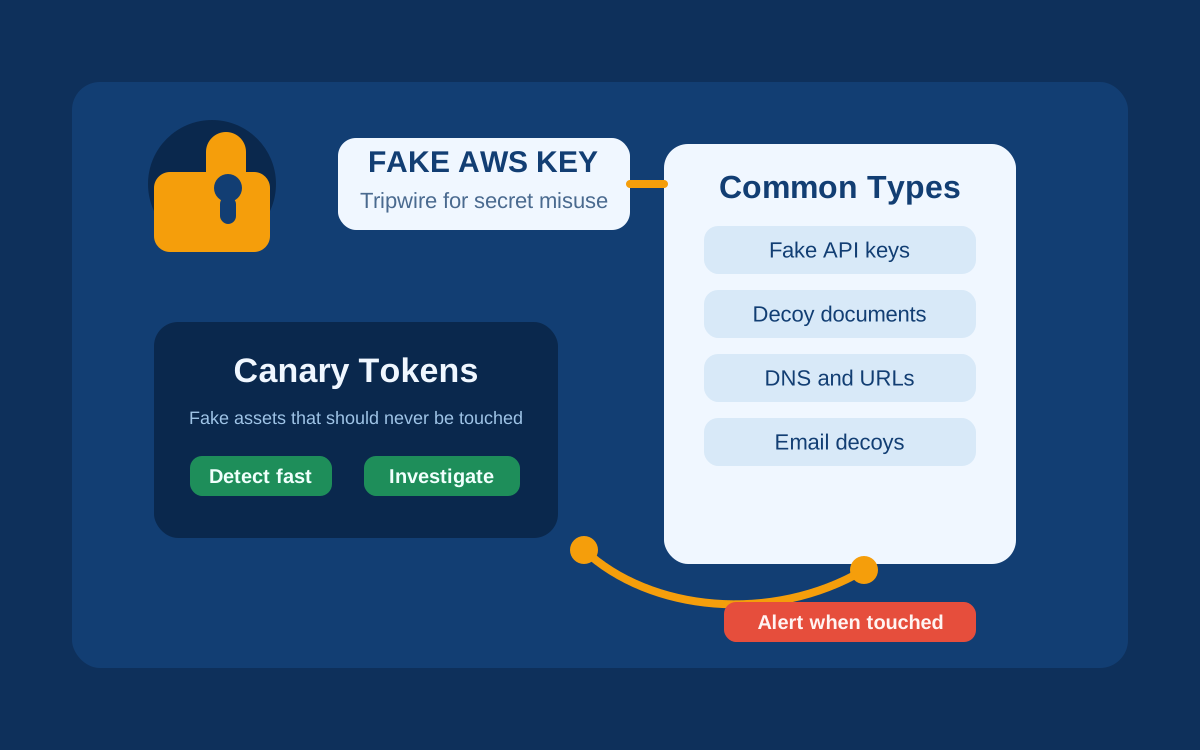
Canary tokens are fake but convincing digital assets that should never be touched in normal operations. What makes them different from an ordinary fake file or fake credential is the alerting path behind them. If someone opens them, validates them, or tries to use them, that action creates a monitored event and generates an alert.
In practice, that usually works in one of two ways:
- A credential canary is tied to backend monitoring. For example, if someone tests the key against AWS or another provider API, the resulting audit or usage event is watched and forwarded to Slack, a SIEM, or an incident workflow.
- A document, link, or DNS canary contains a unique URL, hostname, or embedded request controlled by you or by a token service. When the file is opened or the hostname is resolved, it calls home and the backend sends the alert.
Because none of those should ever be used in normal work, any interaction is worth investigating.
What different types are there?
People use a few related terms here:
- Canary tokens are the specific tripwires that phone home or otherwise create a monitored event when touched.
- Honeytokens are broader decoy data objects such as fake credentials, records, or files.
- Honeypots are larger decoy systems or services built to attract attacker activity.
In practice, common canary or honeytoken patterns include:
- Fake API keys or cloud credentials: place them in code repositories, CI/CD secrets,
.envfiles, or developer credential stores. What makes them canaries is the backend monitoring tied to their use. If someone validates or tries to use the key, that provider event is captured and turned into an alert. - Decoy
.envvalues or config secrets: place them in application config files, deployment manifests, backup folders, or old runbooks where real secrets are often left behind. They become canaries when the fake value points to something monitored, such as a watched credential, URL, or service endpoint, so any attempted use creates a signal. - Fake PDFs, spreadsheets, or shared-drive documents: place them in shared drives, document systems, sync folders, or admin handoff folders with names that suggest sensitive content. They become canaries when the file contains a unique web or DNS beacon, so opening the document causes a request that triggers the alert.
- Tracking URLs, web beacons, or DNS entries: place them in documents, notes, config comments, wiki pages, or anywhere an attacker may click or inspect. They are canaries because the URL or hostname is unique and controlled for monitoring. The click or DNS lookup is the event that makes them sing.
- Decoy email addresses or mailboxes: place them in internal documents, hidden form fields, contact lists, or datasets that should never be reused externally. They become canaries because the address is unique and monitored. Any inbound message to that address is the alert.
- Fake database rows, storage objects, or internal links: place them in databases, object stores, bucket listings, admin indexes, or internal dashboards where browsing should be limited. They become canaries when the row, object, or link contains a unique identifier, URL, or retrieval path that is logged and watched. A query, download, or click is what triggers the signal.
If you want a concrete example of how these patterns can be implemented, Canarytokens is worth looking at. You should do your own due diligence before relying on any third-party service, but the project is open source and can at minimum serve as inspiration for how these backend alerting paths can be designed.
The right choice depends on where attackers are most likely to look. In a SaaS company, source repositories, build pipelines, cloud consoles, and internal documentation are usually the highest-value placements.
Why they work
Canary tokens are useful because they produce high-signal alerts. A legitimate employee should have no reason to test a fake AWS key or open a decoy document. When one fires, the security team has a concrete event to investigate instead of a vague suspicion.
The Grafana cases are good examples of that value. In the 2025 GitHub Actions incident, Grafana explicitly described a canary-driven detection flow and later tied it to an AWS API key decoy in GitHub secrets. In the May 2026 source-code theft disclosure, the public reporting supports the same broader lesson about early detection, but without the same token-level detail.
Where they fit in ISO 27001 and SOC 2
Canary tokens are usually not a standalone compliance program. They fit best as part of a broader monitoring and incident-response control.
For ISO 27001:2022, a canary-token control aligns especially well with:
- Annex A 8.16 Monitoring activities
- Annex A 8.15 Logging
- Annex A 5.24 Information security incident management planning and preparation
- Annex A 5.25 Assessment and decision on information security events
- Annex A 5.26 Response to information security incidents
For SOC 2, the strongest alignment is usually with:
- CC7.2 monitoring system components and detecting anomalies
- CC7.3 evaluating security events to determine whether they are incidents
- CC7.4 responding to and remediating identified security incidents
If you want to formalize this in your ISMS, the control should not say only “we use canary tokens.” A better control says that the organisation deploys decoy credentials, files, or links in selected high-risk locations, routes alerts to the security team, investigates every trigger, and keeps evidence of response.
Useful evidence for audit purposes can include token placement records, alert logs, triage tickets, incident notes, and periodic reviews of where tokens are deployed.
Final point
Canary tokens are one of those rare controls that are simple, cheap, and genuinely useful. The Grafana story is a good reminder that early detection matters, especially in code, secrets, and automation environments where attackers move fast.
They will not replace preventive controls. But they can give you the few minutes of warning that make the difference between a contained incident and a much larger breach.